
In 2013, a widely circulated prediction held that by the mid-2020s the neighborhood movie theatre would be a nostalgia object — a thing that existed in the same cultural category as the video rental store. The logic was clean. Screens got bigger and cheaper. Broadband got faster. Studios started building their own direct-to-consumer platforms. Why would anyone drive somewhere, park, and pay to sit with strangers?
More than a decade later, we can answer that question with evidence instead of speculation. A lot of theatres did close — the ones that were already fragile, over-leveraged, or built around a business model that treated the auditorium as a commodity. But the neighborhood cinema did not disappear. In many markets it stabilized, and in some it grew. It is worth understanding why, because the reasons say something interesting about attention, community, and what people actually buy when they buy a ticket.
Streaming did not compete with theatres. It competed with television.
The original framing was wrong. Streaming's real victim was not the cinema; it was linear TV, the DVD, the cable bundle, and the video store. Those businesses sold access to content, and streaming sells access to content better, cheaper, and faster than any of them.
A movie theatre has never actually sold access to content. It sells a bounded, undistracted, communal experience of a story. That product has no substitute in a living room, because the living room's defining characteristic is that everything else in your life is also in it.
Consider what happens during a two-hour film at home. The phone is within reach. Somebody pauses it. The dog needs out. A text arrives. You check who that actor is. You cook. The average home viewing of a feature film is, according to multiple industry attention studies, split across two or more sittings and interrupted repeatedly. What you experienced was the plot. What you did not experience was the film.

The economics of attention
There is a reason the phrase "second-screen content" exists. Streaming services now openly commission work designed to remain comprehensible when the viewer is looking at a phone. Dialogue is more expositional. Plot points repeat. Ambient sound is compressed so it stays audible on a laptop speaker in a noisy room.
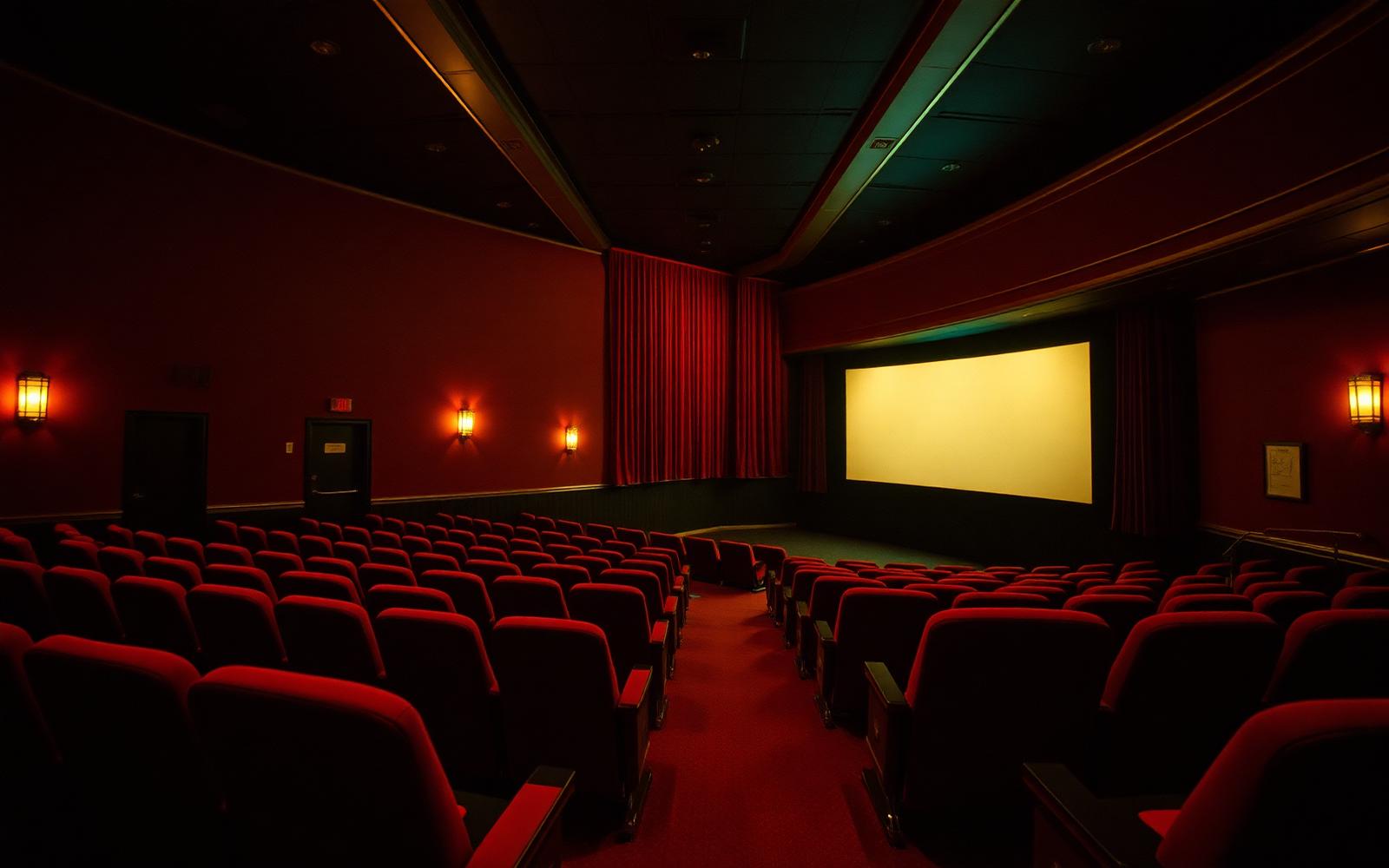
A theatre inverts every one of those constraints. The room is dark so your pupils dilate and the image fills your visual field. The sound is calibrated so a whisper works and a subwoofer hit lands in your chest. And critically, you have made a financial and logistical commitment that makes leaving costly. Behavioral economists call this a commitment device; moviegoers call it "actually watching the movie."
The scarcest resource in modern life is not content. It is uninterrupted attention. A theatre is one of the last commercial venues that sells it directly.
Laughter is contagious and fear is social
There is real research behind this, and any projectionist could have told you the finding without the study. Humans laugh substantially more in groups than alone, and the effect scales with group size. Fear responses similarly amplify in shared physical space. The same comedy that produces a mild exhale on a couch produces a room-wide laugh in an auditorium, and that laughter feeds back — you laugh harder because other people are laughing.
This is why comedies and horror films have consistently over-performed in theatrical release relative to their streaming engagement. It is not that people cannot watch them at home. It is that the home version is a strictly worse version of the same film.
The corollary matters for exhibitors: a half-empty auditorium is a materially worse product than a full one. This is one of the few businesses where other customers improve your experience rather than degrade it.
What actually killed the theatres that died
If streaming was not the primary cause, what was? Looking at the closures across small-market America over the last decade, four causes recur.
Deferred capital investment. The digital conversion of the late 2000s and early 2010s required every screen in America to replace its projection system at a cost of roughly $70,000 to $100,000 per screen. Theatres that financed that conversion at bad terms — or skipped it and lost access to prints — never recovered.
Real estate, not operations. A large fraction of closures were profitable theatres in buildings whose land became worth more as something else. That is a zoning and development story, not a moviegoing story.
Over-expansion in the megaplex era. The 1990s screen-building boom left many markets with far more seats than the local population could fill. The shakeout was arithmetic.
Loss of the middle-budget movie. For thirty years, the reliable weekday business of a neighborhood theatre was the $30–60 million adult drama and comedy. Studios largely stopped making them in favor of tentpoles and streaming originals. That hollowed out the calendar between blockbusters, and theatres that could not adapt their programming got squeezed.
Notice that only the last of these has much to do with streaming, and even that is more about studio strategy than viewer behavior.
The small theatre's structural advantages
Being small in this industry used to be a liability. Increasingly it is not.
Lower fixed costs per screen. A seven-screen theatre in a modest building has a cost structure that a thirty-screen luxury megaplex cannot match. When attendance dips, small survives.
Programming flexibility. A local operator can decide on Wednesday to run a classic on Sunday afternoon. A national chain needs a corporate booking department and a marketing calendar approved a quarter in advance.
Real pricing freedom. The chains are locked into premium pricing to service premium capital investments. A small theatre can charge $5 for a matinee and mean it.
Community relationships that cannot be bought. The people who work at a neighborhood theatre live in the neighborhood. That is not a marketing position; it is a staffing reality, and customers can tell the difference within ten seconds of walking up to a counter.
The third place problem
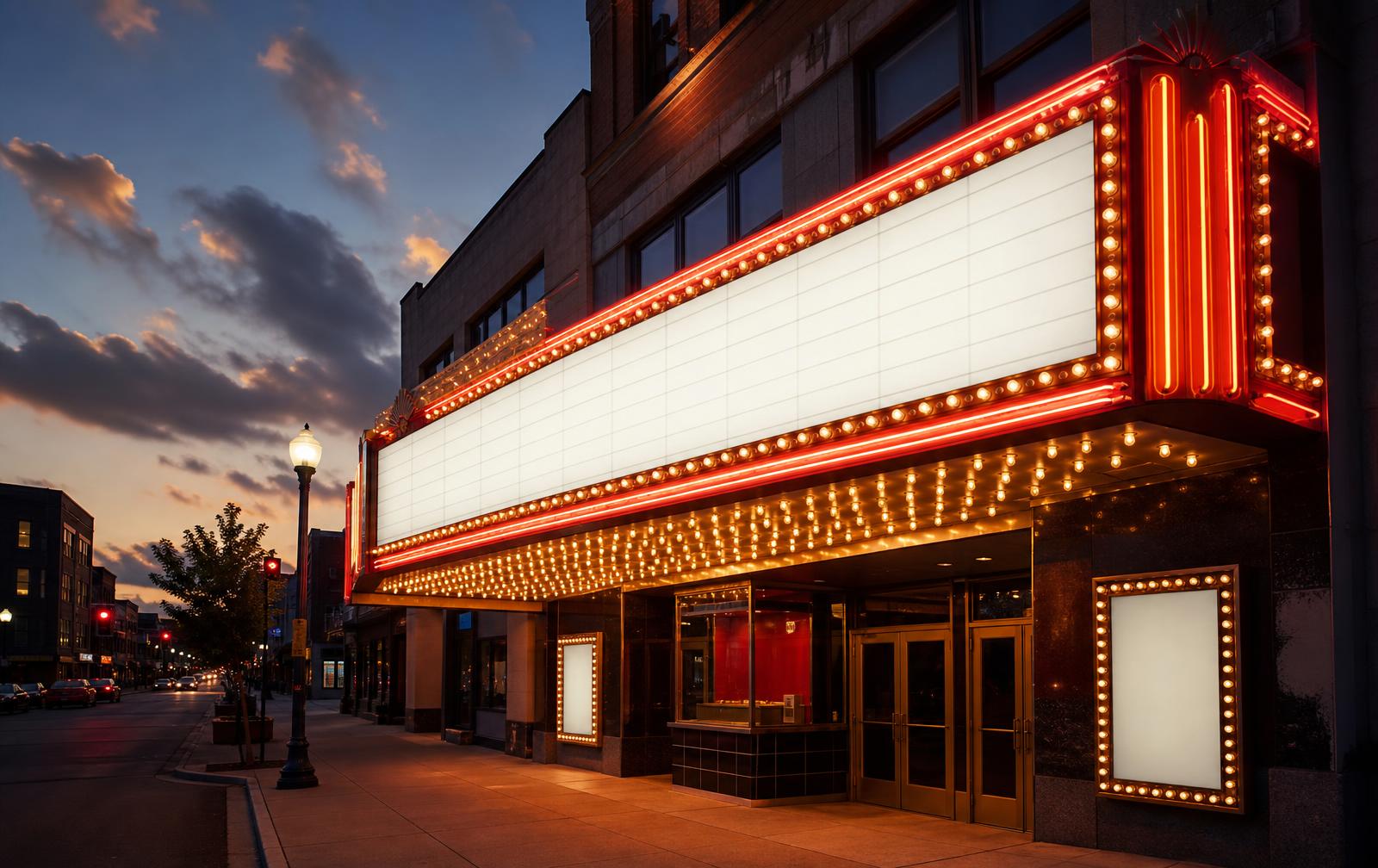
Sociologist Ray Oldenburg's concept of the "third place" — a social environment that is neither home nor work — has become a common frame for discussing what American communities lost over the last forty years. Bowling leagues, church basements, lodges, department store lunch counters, and downtown movie houses all served that function. Most of them are gone.
A theatre is an unusual third place because it does not require you to talk to anyone. That sounds like a weakness and is actually the point. It offers what urbanists call public solitude: the experience of being among people without social obligation. For a teenager who wants out of the house, an older adult who lives alone, a couple who has run out of conversation, or a parent who needs ninety minutes when the kids are contained and quiet, that is not a small thing.
When a town's theatre closes, the town does not just lose a place to see movies. It loses one of the few remaining reasons for people of different ages and incomes to occupy the same room on a Tuesday.
What theatres owe their audience in return
None of this is an argument that people are obligated to buy tickets out of civic duty. Nostalgia is not a business plan, and audiences are not wrong to expect a theatre to be good.
The obligations run in both directions, and they are specific:
- The picture has to be right. Correct aspect ratio, correct brightness, clean lenses, focused image. A dim or misframed presentation is the fastest way to teach someone that home is better.
- The sound has to be calibrated. Not just loud — balanced, with dialogue intelligible and dynamic range intact.
- The room has to be clean. Sticky floors close theatres. There is no more direct causal chain in this industry.
- The price has to be defensible. If a family cannot go without treating it as a special occasion, the habit dies and the habit is the business.
- The staff has to be present. Someone should notice when a projector goes soft or a party of forty arrives at once.
Get those five things right and the theatre is not competing with streaming at all. It is offering something streaming structurally cannot.
What the next decade probably looks like
A few predictions we would be comfortable defending.
Theatrical windows stabilize around 30 to 45 days for most titles. The experiments in day-and-date release largely damaged both sides of the ledger and have been quietly abandoned for anything with real box-office upside.
Event programming grows faster than first-run. Anniversary screenings, concert films, live sports, anime, faith-based releases, and community rentals are the fastest-growing segments in exhibition. The auditorium is being rediscovered as a general-purpose venue.
Premiumization splits the market. Big chains chase recliners, dining, and $22 tickets. Independents go the other way and compete on affordability and frequency. Both can work; the middle is the dangerous place to stand.
Local matters more, not less. As distribution becomes globally uniform, the only thing a theatre can offer that nobody else can is being here, run by people who are also here.
Why we are still open
West Mall 7 has been showing movies to Sioux Falls for decades. We converted to digital. We rebuilt the seating. We renovated the lobby. We kept matinees at five dollars while the national average climbed past eleven. None of that was strategy borrowed from a consulting deck; it was a series of decisions about what kind of place we wanted to be in the community we actually live in.
The prediction was that we would be a nostalgia object by now. Instead we are a Tuesday night habit for a few thousand people, a first job for a rotating group of local teenagers, and a dark room where a couple hundred strangers occasionally laugh at exactly the same moment.
That turns out to be worth keeping.