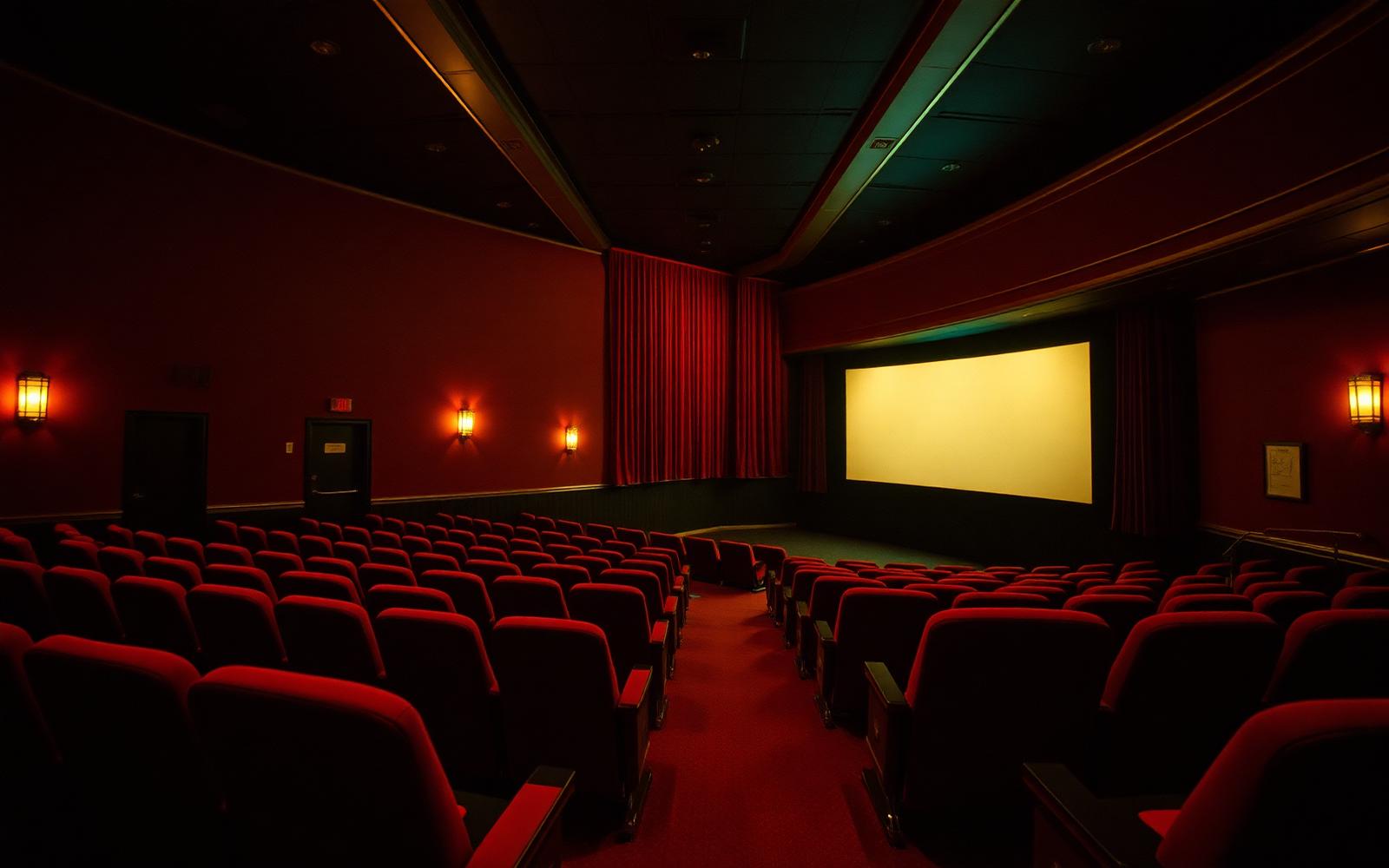

A movie ticket used to be the least expensive night out a family could plan. In a lot of American cities, that stopped being true somewhere around 2015. Premium formats, reserved recliners, service fees, and $18 evening adult admission turned a casual Friday habit into a budgeting decision. Sioux Falls has been luckier than most, and we want to explain exactly why — and exactly how to take advantage of it.
This is the guide we wish existed when people call the box office and ask, "What's the cheapest way to see a movie tonight?" There is a real answer, it changes by day and hour, and nobody should have to guess.
The short version
If you only remember four things from this article, remember these:
- Every show that starts before 6:00 PM at West Mall 7 Theatres is $5. Every day. Every seat. Every movie.
- Tuesdays are $6 all day, including evening shows.
- Kids 11 and under and seniors 60 and over are $6 at every showtime, all week.
- The most expensive ticket we sell — an adult, evening, weekend seat — is $9.
That is the entire pricing structure. There is no premium-format upcharge, no reserved-seat surcharge, no online convenience fee tacked on at the end of a checkout flow, and no "peak pricing" on opening weekend.
Why matinee pricing exists in the first place
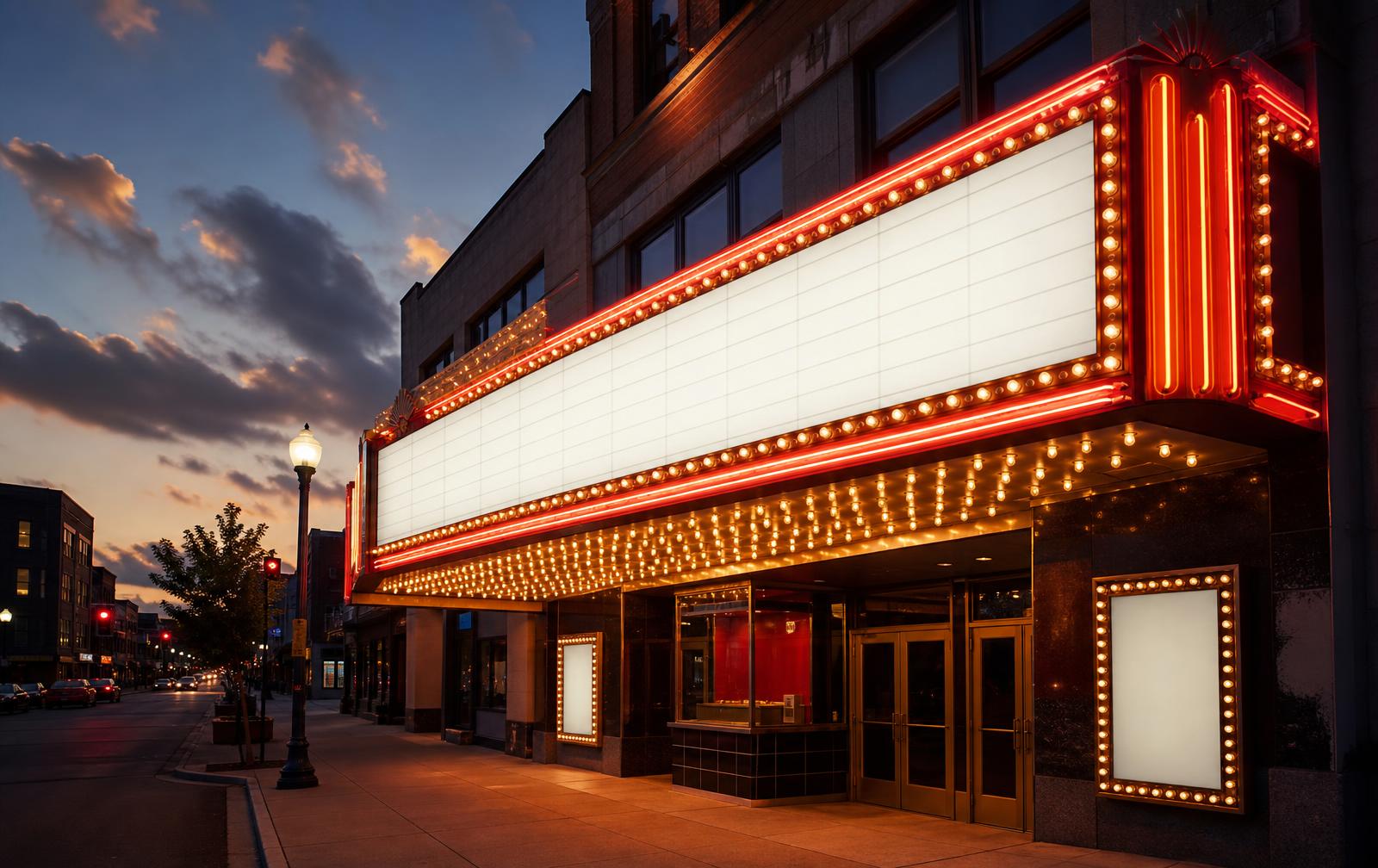
Matinee pricing is not charity. It is the oldest yield-management tool in the exhibition business, and it dates to the earliest days of the movie palace. A theatre auditorium is a perishable good: a 10:40 AM seat that goes unsold on Tuesday cannot be sold twice on Saturday night. The room costs the same to heat, light, staff, and project whether four people or four hundred people are in it.
So exhibitors do what airlines and hotels do. They discount the inventory that is hardest to sell in order to fill the room, and they hold price on the inventory everybody wants. The difference is that airlines hide the logic behind a dynamic pricing engine and we print ours on a board above the register.
The practical upshot for a moviegoer is enormous. A family of four seeing a 4:30 PM show pays $20. The same family seeing the 7:15 PM show of the same movie in the same auditorium pays $30 — and that is still one of the lowest evening prices in the region. Shifting your movie habit two and a half hours earlier saves a four-person household roughly $520 a year at one movie a month.
The 6:00 PM line is a start time, not an arrival time
This is the single most common misunderstanding at the box office. Matinee pricing applies to shows that begin before 6:00 PM. A 5:45 PM start is a matinee even though most of the movie plays after six. A 6:05 PM start is not, even if you bought the ticket at 4:00 in the afternoon. When a showtime lands close to the line, it is worth checking the schedule for a slightly earlier option — the gap between a 5:50 and a 6:10 show is twenty minutes of your evening and $4 a head.
Tuesday: the day the whole week bends around
Discount Tuesday is an industry-wide convention, and it is worth understanding why exhibitors converged on the same weekday. Monday is the deadest day at the box office nationally, but it is also the day people are least willing to leave the house. Wednesday historically belonged to preview screenings and midweek openings. Tuesday sits in the sweet spot: far enough from the weekend that the room would otherwise be empty, close enough to the weekend that people will still make plans.
At West Mall 7, Tuesday is $6 all day — which means Tuesday evening is the only time an adult can see a brand-new release at night for less than the price of two coffees. Tuesday evening shows are consistently our busiest weeknight, and the 7:00–7:30 PM block is the first to fill. If you are planning a Tuesday, buy earlier in the day.
A useful rule of thumb: if you can move a movie plan to Tuesday, do. If you cannot move the day, move the time.
Kids, seniors, students, and military
Age- and status-based pricing is where a lot of theatres quietly get complicated. Ours is deliberately simple:
- Children 11 and under: $6 at every showtime.
- Seniors 60 and over: $6 at every showtime.
- Students with a valid school ID: $8 evening, and the standard $5 before 6:00 PM.
- Active-duty and veteran military with ID: $8 evening, and $5 before 6:00 PM.
The important nuance: discounts do not stack, and they do not need to. Matinee pricing at $5 is already lower than every category rate, so a senior at a 3:00 PM show pays $5, not $6. You always get the lowest applicable price without asking for it. Nobody at our box office is going to let you overpay because you did not know the right words to say.
Where the money actually goes
People are often surprised to learn how little of a ticket a theatre keeps. On a major studio release in its opening weekend, the distributor's share of box office receipts commonly runs 55% to 65%, and on the biggest tentpole titles it can start higher and step down week by week under a sliding scale. That share is negotiated title by title, and a small independent exhibitor has far less leverage than a national chain with two thousand screens.
What this means in plain terms: on a $9 opening-weekend ticket, the theatre might retain around $3.50 before paying for staff, film licensing overhead, projector maintenance, utilities, insurance, cleaning, and the building itself. That is why concessions matter so much to independent theatres, and it is also why the price on the marquee is not arbitrary. Every dollar shaved off admission has to be earned back somewhere or the screens go dark — which is exactly what happened to hundreds of small-market theatres between 2020 and 2024.
We say this not to guilt anyone into buying popcorn but because moviegoers deserve to understand the economics of the room they are sitting in. When you choose an independent theatre over a streaming rental, the money stays in Sioux Falls: it pays local teenagers their first paycheck, it pays a local HVAC contractor, and it keeps a building on West 41st Street occupied and lit.

The concession math nobody does
Here is the uncomfortable truth about ticket deals: most people who carefully optimize a $5 matinee then spend $22 at the concession stand without blinking. If your goal is a genuinely inexpensive outing, the ticket is the easy part.
Some honest strategies that actually work:
- Share the large. A large popcorn is meaningfully cheaper per ounce than two smalls, and free refills mean a large is functionally unlimited for a family.
- Eat first, snack second. A movie is two hours. A meal beforehand turns concessions from dinner into dessert, which cuts the tab by more than half.
- Buy a combo, not components. Combos exist because they are cheaper than the same items purchased separately. This is not a trick; it is the whole point.
- Use the free birthday reward. If you are signed up for Reel Fan Rewards, you get a free popcorn during your birthday week. One person per household with a birthday every month of the year is a perfectly legal loophole.
Gift cards as a budgeting tool
Most people think of gift cards as presents. Frequent moviegoers use them as a spending cap. Loading a fixed amount onto a gift card at the start of the month and using it exclusively for tickets and concessions turns an open-ended budget into a closed one, and it removes the decision fatigue from every individual purchase.
Gift cards also solve the classic teenage-drop-off problem. A parent who loads $30 onto a card knows exactly what the evening will cost and does not have to hand over a debit card or negotiate at the counter by phone.
Group and school rates
Groups of twenty or more can be booked at a negotiated rate, and school, church, daycare, and nonprofit groups get the best pricing we offer. Weekday mornings are the cheapest window because the auditoriums would otherwise be empty, which is also why field-trip screenings almost always land before noon.
If you are organizing a group, a few things speed the process dramatically:
- Come with a head count range rather than an exact number; we can hold an auditorium against a range.
- Be flexible on title. A movie in its third or fourth week is far easier to book than an opening-weekend release.
- Ask about the concession bundle. Pre-ordered popcorn and drinks in bulk cost less and eliminate a twenty-minute line for a group of forty.
Buying a private auditorium is cheaper than people assume
A full private screening sounds like a luxury purchase. For a group of fifteen to thirty people, it frequently costs less per head than the same group buying individual tickets at a big-box theatre in a metro market — and everybody gets the room to themselves.
Birthday parties, small corporate meetings, church groups, gaming nights on the big screen, and watch parties for a big game or a season finale all work in a cinema auditorium. It is a room with world-class sound, tiered seating, and a screen the size of a house. Using it exclusively for first-run features is a waste of a good room.
What to skip
A guide about saving money should be honest about the tactics that do not work.
- Third-party discount ticket resellers. The savings are usually a dollar or two, the fees are real, and if something goes wrong the theatre cannot fix a ticket it did not sell.
- Waiting for a movie to leave first run. In a market this size, popular titles often play only two to four weeks. Waiting frequently means waiting for streaming, which is not the same experience.
- Sneaking in food. Aside from the policy issue, it is the single most direct way to close a small theatre. The margin on concessions is what pays the projection bill.
Putting it together: three sample nights
The genuinely cheap night. Two adults, 4:15 PM Tuesday show, share a large popcorn and a large drink. Tickets $10, concessions around $12. Total under $25 for a two-and-a-half-hour night out.
The family Saturday. Two adults and two kids, 3:00 PM show. Four $5 matinee tickets is $20 — the kids' $6 rate does not even apply because matinee is lower. Two large popcorns and four drinks lands the whole afternoon near $50.
The date night that still feels like one. Two adults, 7:20 PM Friday, $9 each. Add a shared popcorn and two drinks. Eighteen dollars for admission to a first-run film in a real auditorium with real sound is, adjusted for inflation, roughly what a movie cost your grandparents.
The honest bottom line
Sioux Falls has one of the lowest movie ticket prices of any city its size in the United States, and that is not an accident of geography — it is a choice a local business makes every quarter when it decides not to raise prices. The best way to keep a $5 matinee alive is to use it.
Check what is playing, pick a time before six, and bring somebody with you.