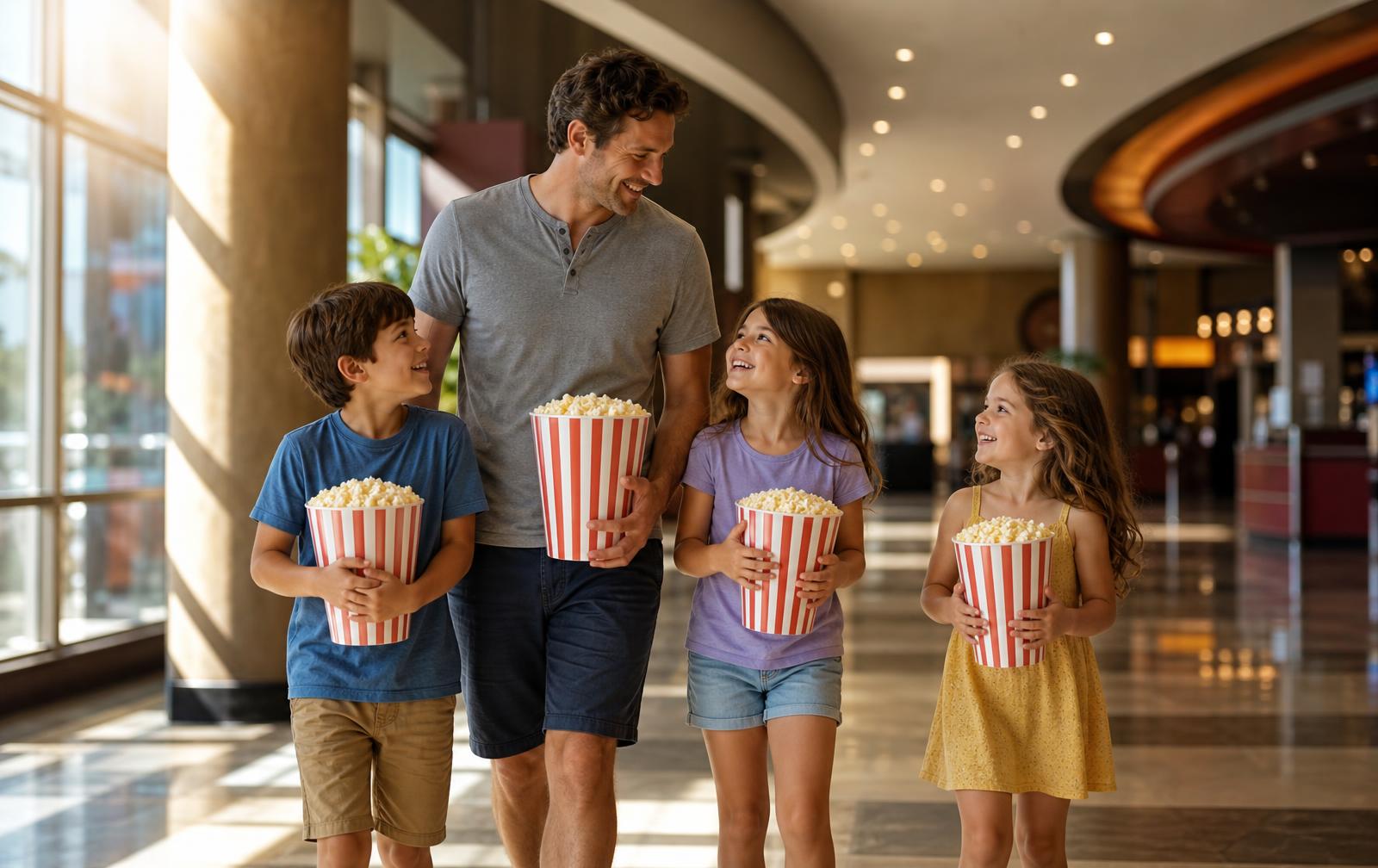
There are two versions of taking small children to the movies. In one, everybody has a wonderful time and you talk about it for a week. In the other, you spend $40 to stand in a hallway with a crying four-year-old while your spouse watches an animated film alone.
The difference between those two outcomes is almost entirely preparation, and the preparation is not complicated. This is the guide we give parents who ask at the box office, assembled from a couple of decades of watching families succeed and fail at exactly this.
Start with the honest age question
There is no universal right age for a first movie, but there are useful markers. Most kids are ready somewhere between three and five, and readiness has less to do with age than with three specific capacities:
- Can they sit through roughly 45 minutes of something at home without needing to get up? A 90-minute feature is a stretch even for a kid who can do this, but if 45 minutes is impossible, the theatre will be too.
- Do loud sounds frighten them, or excite them? Cinema sound is genuinely loud, and the low frequencies are felt as much as heard.
- Are they okay in the dark? A theatre is darker than most children's bedrooms, and it gets dark suddenly.
If any of those is a maybe, a matinee is the answer, not a delay. Daytime shows are shorter on trailers, less crowded, and — crucially — leaving early costs $5 instead of $9.
Pick the right movie, not the popular one
The animated blockbuster everyone is talking about may not be the right first film. Look for:
- Runtime under 100 minutes. Anything longer and the last act is a coin flip.
- Bright, high-contrast animation. Dark, muted color palettes are harder for young eyes to track on a big screen.
- Familiar characters. A kid who already knows the characters spends less cognitive energy on comprehension and more on enjoyment.
- A film in its second or third week. Smaller crowds, fewer trailers on some schedules, and far more room to move around.
The classic parental mistake is opening weekend of the biggest release of the summer. The room is full, the volume is up, the trailers run twenty minutes, and there is no aisle seat left.
Book the right seats
Seat selection matters more for families than for anyone else. Our recommendations, in order:
- Aisle seat, back half of the auditorium. You can exit without climbing over anyone, and you are far enough back that the screen fills the field of view comfortably rather than towering.
- End of a row near an exit. Same logic, slightly better sightline in some rooms.
- Avoid the front three rows with kids under six. The neck angle is uncomfortable and the sound is loudest there.
If you are bringing more than two children, split adults: one at each end of the row, kids in the middle. This eliminates the classic problem of a parent needing to exit past three children in the dark.
The pre-show routine that prevents most problems
Meltdowns in theatres almost always trace to one of four causes: hunger, bathroom, overstimulation, or surprise. All four are preventable.
Feed them first. A hungry child cannot watch a movie. Popcorn is not a meal, and the sugar in a large soda at 4:00 PM has a predictable consequence around minute sixty.
Bathroom before the trailers, not before the movie. Trailers run 10 to 20 minutes. A bathroom trip at showtime means missing the opening.
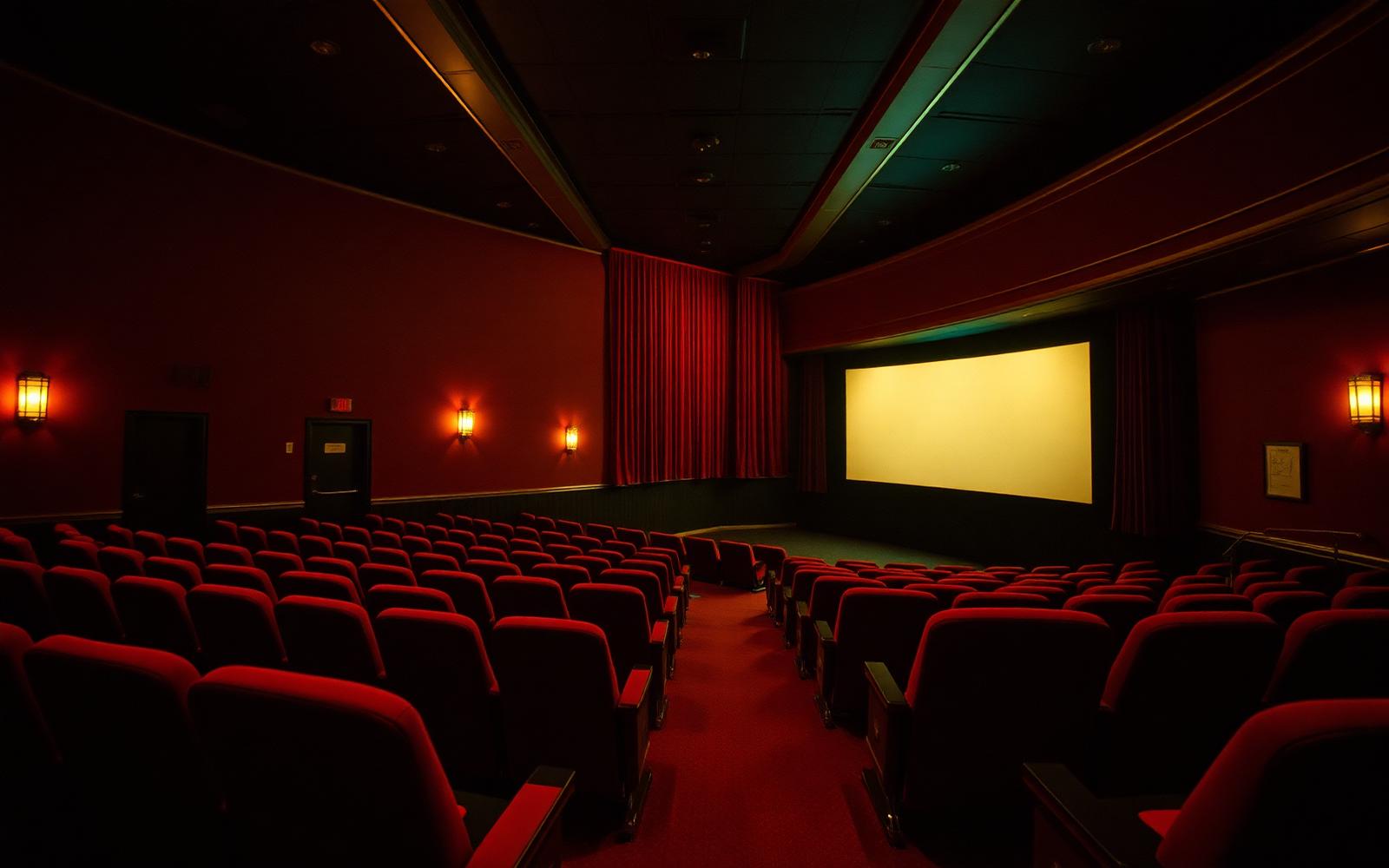
Explain the room before you walk in. Literally narrate it: "It's going to get dark. It's going to be loud. The screen is very big. If you want to leave, squeeze my hand and we'll go out and come back." Kids handle almost anything they have been warned about and almost nothing they haven't.
Bring a comfort object. A stuffed animal or a blanket in a dark, cold, loud room is worth more than any snack.
Set the "we can leave" rule out loud. Paradoxically, telling a child they are allowed to leave dramatically reduces the odds they will want to. What frightens kids in theatres is usually the feeling of being trapped, not the film.
The sensory-friendly conversation
For children with autism, sensory processing differences, ADHD, or anxiety, a standard screening can be genuinely overwhelming: sudden 100+ dB sound, total darkness, and a strong expectation of stillness and silence.
Strategies that help in a standard showing:
- Sit near the back. Sound pressure is lower and the exit is close.
- Bring ear defenders or noise-reducing earplugs. Extremely common and nothing to feel self-conscious about.
- Choose the earliest matinee of the day. Smallest crowd, lowest social pressure.
- Ask staff about the quietest auditorium. Rooms differ, and the people who work there know which one is gentlest.
- Plan a "halfway break." Stepping into the lobby for two minutes at the midpoint resets a lot of kids and costs nothing.
If a dedicated sensory-friendly screening — lights partially up, sound turned down, movement and noise welcomed — would help your family, ask us. Demand for these is how they get scheduled.
What a family movie actually costs here
Let us do the arithmetic honestly, because "let's go to the movies" is a very different sentence depending on the number attached.
Family of four, matinee (before 6:00 PM): four tickets at $5 = $20. Add a large popcorn with free refills and four drinks and the outing lands in the $45–50 range total. That is a three-hour block of the day, in air conditioning, with everyone in the same room and nobody on a screen in their hand.
Family of four, evening: two adults at $9 and two kids at $6 = $30. Same concessions, roughly $55–60.
Tuesday, any time: four at $6 = $24.
Compare that against a family trip to almost any indoor entertainment venue in the region and the movies remain the best value per hour of the group. The trick is knowing that the $20 version and the $30 version exist, and picking the one your week can absorb.

Rainy day, snow day, and the "there is nothing to do" day
Sioux Falls has weather. Roughly a third of the calendar is either too cold, too hot, or too wet for the parks, and the school year adds no-school days that arrive with no plan attached.
A standing family answer for those days is genuinely valuable, and the components are simple:
- Know the matinee schedule. Before-6:00-PM shows are $5 every single day, which makes an unplanned afternoon movie a $20 decision rather than a $60 one.
- Keep a gift card in the glovebox. Turns a spontaneous trip into a pre-budgeted one and removes the negotiation entirely.
- Have a fallback title. There is almost always something family-appropriate on at least one of seven screens.
The summer strategy
Summer is the long stretch. School ends, structure disappears, and the daily question of what to do arrives at 9:00 AM every morning for eleven weeks.
Discount summer kids series exist at theatres across the country specifically for this problem: cheap morning screenings of family favorites, usually on fixed weekdays, usually with a snack included. They are inexpensive because the auditorium would be empty at 10:00 AM anyway, and they are wildly popular because they solve a real problem for a real audience.
A few tips for making the most of a summer series:
- Go early in the season. Attendance builds week over week; the first few weeks are the least crowded.
- Bring the neighbors. A group of six kids at a morning show is easier to manage than two, because they entertain each other.
- Treat it as the anchor of the day. A 10:00 AM movie plus lunch afterward fills the hardest half of a summer day.
- Pajamas are fine. Genuinely. Nobody at a 10:00 AM kids show is judging anyone's outfit.
Teaching theatre manners without ruining the day
Kids are not born knowing how to behave in an auditorium, and the goal is not silence — it is consideration. Three rules cover almost everything:
- Feet off the seat in front of you. The person there can feel every kick.
- Inside voice for questions, and save the big ones for after. Whispered questions during a movie are fine and normal.
- No phones once it's dark. This one applies to adults more than children, and children absolutely notice whether you follow it.
Reactions — laughing, gasping, clapping at the end — are not misbehavior. They are the entire reason to watch a film with other people. A kid laughing loudly at a joke in an animated movie is the sound of a theatre working correctly.
The part nobody plans for: after the movie
The ten minutes after a film is when a family movie day becomes a family memory. Ask real questions in the car:
- Who was your favorite, and why?
- Was there a part that was scary? What made it scary?
- What would you have done differently than the main character?
Children who talk about a story afterward retain more of it and build the habit of thinking critically about what they watch. It also turns a passive activity into a shared one, which is the difference between "we went to a movie" and "remember when we saw that."
The short checklist
Print this, screenshot it, whatever works:
- Matinee before 6:00 PM ($5) or Tuesday ($6)
- Runtime under 100 minutes for kids under six
- Eat a real meal first
- Bathroom before the trailers
- Aisle seat, back half
- Comfort object in the bag
- Ear protection if sound is a concern
- Say out loud: "We can leave any time"
- One large popcorn, refills, share it
- Ask three questions in the car
Nine of those ten cost nothing. The tenth costs five dollars.